CNC lathe workholding explained: hydraulic chuck, draw tube and rotary cylinder
On a CNC lathe the part is held by a clamping system with three parts: the hydraulic chuck on the spindle nose, the draw tube that runs through the spindle bore, and the rotary cylinder at the rear. Together they decide the clamping force, how accurately the part re-clamps, the largest bar that fits through, and how safely the machine runs at high speed.
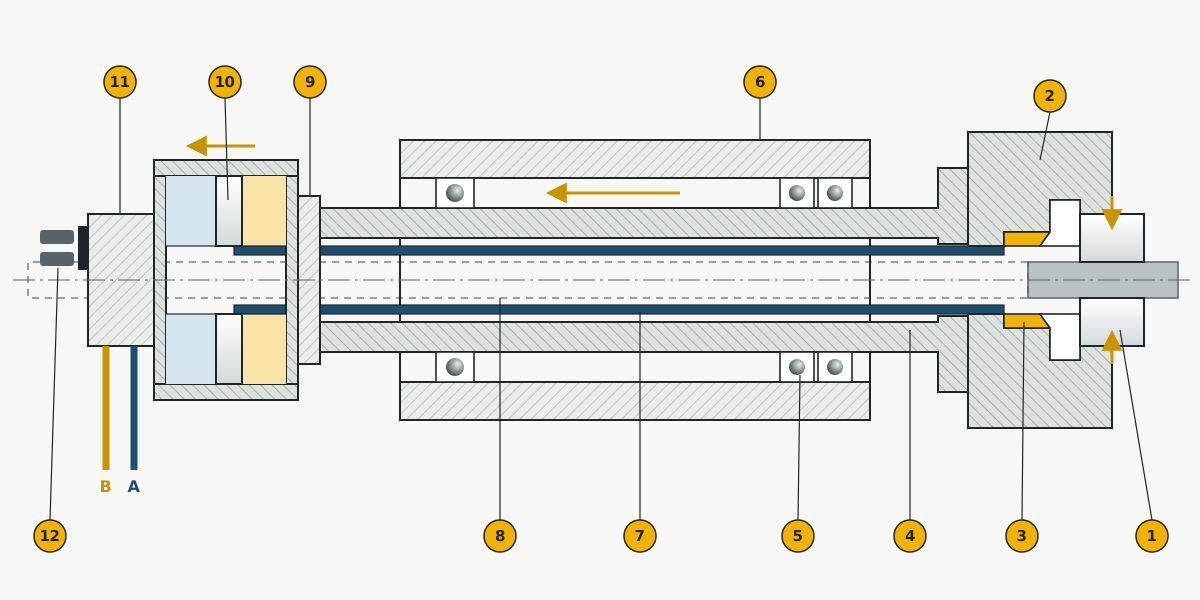
- Jaws
- Chuck body
- Wedge plunger (turns axial force into radial force)
- Spindle
- Spindle bearings
- Headstock
- Draw tube
- Spindle bore (dashed line: bar stock passing through)
- Cylinder adapter
- Rotary cylinder piston
- Oil distributor (non-rotating), ports A and B
- Stroke detection switches
1. The three main parts
The hydraulic chuck (1–3) sits on the spindle nose and grips the part. The draw tube (7) runs through the spindle bore and links the chuck to the cylinder. The rotary cylinder (9–12) is mounted at the rear of the spindle and turns with it; only the oil distributor (11) stays still, connected to the hydraulic unit by hoses A and B.
2. How clamping works
Clamping works like this:
- Oil enters port B and fills the chamber on the chuck side of the piston (10).
- The piston moves rearward and pulls the draw tube (7) with it.
- The draw tube pulls the wedge plunger (3), whose angled faces turn the axial pull into radial force.
- The jaws (1) move toward the centre and clamp the part.
When oil enters port A, the motion reverses and the jaws open.
3. Hollow and solid chucks
Only a hollow chuck with a hollow cylinder lets bar stock pass through the whole spindle (8), so a bar feeder can run the machine continuously. The through-hole size differs between makers, and the largest bar is limited by the smallest bore in the system: the chuck through-hole, the draw tube bore or the cylinder through-hole. When comparing machines, check the maximum bar capacity, not only the spindle bore.
A solid chuck (with a solid cylinder) does not let bar stock through, so it cannot run long bars; it is mostly used for forgings, castings or pre-cut blanks.
4. Clamping force, pressure and speed
- Clamping force rises with oil pressure. For thin-walled parts, lower the pressure to avoid distorting the part.
- At high spindle speed, centrifugal force pulls the jaws outward and reduces the real clamping force. Stay within the chuck's maximum speed, and take extra care with tall or heavy jaws.
5. Safety features
- Many rotary cylinders have built-in check valves that hold the pressure inside the cylinder if the supply pressure is lost, so the part is not released immediately.
- The stroke detection switches (12) confirm whether the jaws are clamped or open; the spindle only starts once clamping is confirmed.
- After changing jaws or adjusting the draw tube, reset the position of the stroke switches.
6. Maintenance and common problems
Grease the chuck every day with molybdenum disulfide (MoS₂) grease, and clean chips off the jaws and serrations. To extend chuck life, besides daily greasing, remove the jaws weekly or at regular intervals and thoroughly clean the deposits out of the jaw guideways. When re-boring soft jaws, use a jaw-forming ring so the jaws are machined while clamped in the same position as in production. Common problems:
| Symptom | Common causes |
|---|---|
| Low clamping force | Not enough grease, chips and coolant inside the chuck, low oil pressure |
| Poor re-clamping accuracy | Dirty serrations, worn jaws, loose jaw bolts, soft jaws not re-bored |
| Oil leak at cylinder or distributor | Worn seals |
| Machine reports not clamped | Stroke switches out of position after a jaw change |
7. What to check when buying
- Chuck size (6, 8, 10, 12 inch and so on) to suit your part diameter.
- Maximum bar capacity if you will use a bar feeder.
- Clamping force and maximum speed of the chuck.
Read more: how to choose a CNC lathe, how to prepare a CNC machine RFQ, or try the machine selector. Need a workholding setup recommended for your part? Request a quote and we reply within 2 working days.
Looking for a machine?
Send your drawing, material and volume. We recommend suitable machines and send quotes.
Request a quote